Why Clients Flinch at Treatment Prices—and the Conversation That Changes Everything
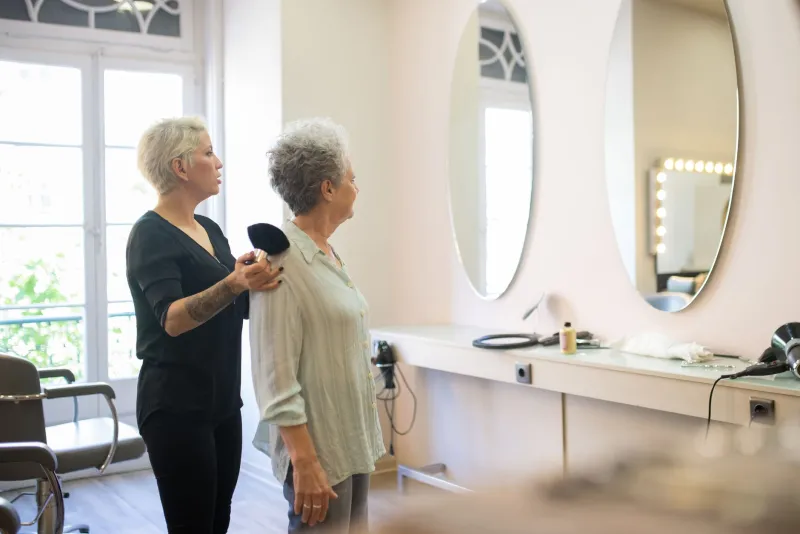
There is a moment every stylist recognizes. The service menu is presented, a treatment is recommended, and the client's eyes drift to the price. A pause follows—brief but unmistakable. In that silence lives a question the client may never voice aloud: Is this really worth it?
The instinct to hesitate is not a character flaw or a budget limitation. It is, in fact, a predictable psychological response. Understanding why it happens—and how to address it with confidence and clarity—is one of the most valuable skills a salon professional can develop.
The Perception Problem: Luxury Versus Investment
Consumer psychology research has long established that individuals evaluate purchases through one of two mental frameworks: consumption (something enjoyed once and gone) or investment (something that delivers returns over time). When a client walks into a salon, they typically arrive with the consumption mindset firmly in place. A haircut is a service rendered. A blowout is a treat. A deep conditioning treatment? That registers, almost automatically, as an indulgence.
The challenge is that professional-grade treatments—bond builders, keratin therapies, scalp treatments, reconstructive protein protocols—are genuinely investments. They alter the hair's structural integrity, extend the life of color services, reduce breakage, and often mean the client needs fewer corrective appointments down the road. The value is real. The problem is that it is invisible to someone who has spent years reaching for a $12 conditioner at the drugstore and calling it hair care.
Until a stylist reframes the conversation, the client is comparing a $95 treatment to a $12 product and finding the math unconvincing. The comparison itself is the error—and it is the professional's job to correct it.
What Drugstore Math Gets Wrong
Many clients arrive with a quiet confidence in their at-home routines. They have a leave-in conditioner, a weekly mask, perhaps a hair oil they read about in a magazine. These products are not without merit, but they operate on the surface of the strand. Professional treatments penetrate the cortex, work within the cuticle layer, or address the scalp at a cellular level—mechanisms that over-the-counter formulations are neither designed nor permitted to replicate.
The comparison that resonates most effectively with clients is one drawn from their own lives. Consider this exchange:
"Think about the difference between applying sunscreen at home and getting a professional-grade chemical peel. Both involve skincare, but they are not the same conversation. What we're doing today works at a level your at-home products simply cannot reach—and that's not a sales pitch, that's chemistry."
This language does several things simultaneously. It validates the client's existing habits rather than dismissing them, it introduces a familiar analogy from the world of skincare (a category where consumers are already accustomed to spending more for professional results), and it grounds the claim in science rather than salesmanship.
Speaking in Returns, Not Costs
The most effective reframe a stylist can offer is a shift from cost language to return language. "This treatment is $85" is cost language. "This treatment typically extends the life of your color by three to four weeks, which means you're likely coming in for fewer toning appointments this year" is return language.
Return language requires preparation. Before a stylist can speak fluently about ROI, they need to know their client's service history, their goals, and the specific benefits of the treatment being recommended. A bond-building add-on during a bleach service, for instance, is not merely a premium—it is structural insurance that reduces the risk of breakage and preserves the integrity of future appointments. Framed that way, the price becomes a form of protection rather than an upgrade.
Some concrete phrases that translate well across a range of client conversations:
- "This treatment is doing work that your hair will carry for the next six to eight weeks—it's not a one-day result."
- "Think of it as maintenance that prevents a much more expensive correction later."
- "Clients who do this consistently tend to notice they need less product at home, which offsets the cost over time."
- "The formulas we use here aren't available retail—this is salon-exclusive, which means results you genuinely cannot replicate at home."
Each of these statements shifts the client's mental ledger from a single-line expense to a longer-term calculation.
The Role of Transparency in Building Trust
One of the most underutilized tools in a stylist's value-communication arsenal is straightforward transparency. Clients in the United States are increasingly savvy consumers—they research products, read ingredient labels, and watch tutorials. They do not respond well to vague promises or high-pressure upselling. They respond to honesty.
If a treatment is genuinely not necessary for a particular client on a particular visit, saying so builds more trust than recommending it anyway. "Your hair is actually in great shape today—I'd skip the protein treatment this time and revisit it in a couple of months" is the kind of guidance that earns loyalty. When that same stylist recommends a treatment at the next appointment, the client listens differently. The recommendation carries weight because it comes from someone who has already demonstrated they are not simply chasing add-on revenue.
Transparency also means being specific about what a treatment will and will not do. Overpromising is a short-term gain with long-term consequences. A client who expected silky perfection and received modest improvement will not return—and may not recommend the salon to others. A client who was told, "This will significantly reduce frizz and improve manageability, though your curl pattern will still be present," and experienced exactly that, will book again.
Presentation Matters as Much as Language
The physical and environmental context in which a treatment is introduced shapes the client's perception before a single word is spoken. A treatment displayed in a sleek glass vessel on a clean shelf, described in a menu with clear benefit-focused language, and recommended by a stylist who can speak to its ingredients and mechanism of action, reads as professional and credible. The same treatment mentioned as an afterthought while the client is already in the chair, with no visual support or explanation, reads as an upsell.
Salon professionals who invest time in understanding the treatments they recommend—not just their names and prices, but their active ingredients, their target concerns, and their clinical results—are better equipped to have these conversations naturally and confidently. Confidence, it turns out, is itself a form of value communication.
Elevating the Standard of the Conversation
At Hair Bar Professional, we believe that the gap between what a client is willing to pay and what a service is worth is almost always a communication gap, not a financial one. When stylists approach treatment recommendations with the precision of an educator and the warmth of a trusted advisor, clients do not just agree to the service—they feel grateful for the guidance.
The client who initially flinched at a $90 treatment and left understanding exactly what it accomplished, why it mattered for their specific hair, and what to expect in the weeks ahead, is not a client who was talked into something. She is a client who was cared for. And she will be back.