Four Seasons, Four Formulas: How Temperature and Humidity Reshape Your Hair—and What Professionals Recommend Year-Round
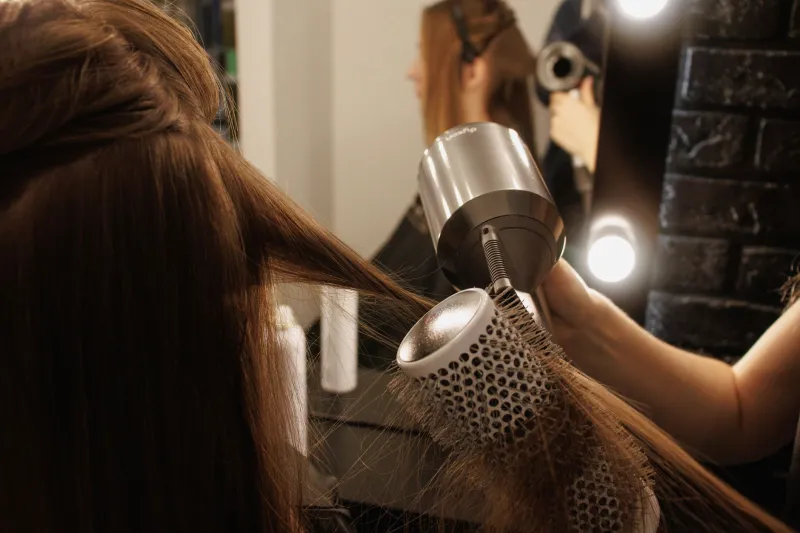
There is a conversation that happens in salons across the country every single year, repeated with remarkable consistency regardless of geography or hair type. A client settles into the chair, gestures vaguely toward the mirror, and says some version of the same thing: "I don't know what happened. It was working perfectly, and then suddenly it just... changed."
What changed, in almost every case, is the season.
Hair is a living fiber in the sense that it responds continuously to its environment. The protein-and-moisture balance within each strand, the behavior of the cuticle layer, the way a style holds or collapses—all of these are influenced by external conditions that shift dramatically across the American calendar year. For salon professionals, understanding the science behind seasonal hair behavior is not a supplementary skill. It is a foundational one.
Why Hair Responds to Environmental Conditions at All
To understand seasonal change, it helps to understand the basic architecture of the hair shaft. The outermost layer—the cuticle—is composed of overlapping, scale-like cells that open and close in response to moisture and pH. When humidity rises, the cortex beneath the cuticle absorbs water vapor from the air, causing the strand to swell. This swelling forces the cuticle scales outward, disrupting the smooth surface that reflects light and holds a style in place. The result is frizz, volume loss, elongation in curls, and a general sense of unruliness that no amount of product seems to fully correct.
Cold, dry air presents the opposite problem. When humidity drops—as it does dramatically across much of the United States from October through February—the hair shaft loses moisture to the surrounding atmosphere. The cuticle contracts, the cortex dehydrates, and the strand becomes brittle, prone to static, and resistant to smoothing. Color-treated hair is especially vulnerable, as the dye molecules held within the cortex are more easily displaced when the structure is compromised.
Temperature compounds these effects. Heat accelerates chemical processes within the strand, including oxidation, which is why colored hair tends to fade faster in summer months. Cold temperatures slow those same processes but increase mechanical brittleness, making hair more likely to snap under tension.
Spring: The Transition Phase Professionals Often Underestimate
Spring is arguably the most underestimated season in the professional hair care calendar. As temperatures begin to rise and humidity fluctuates unpredictably—warm afternoons followed by cool, damp mornings—the hair cuticle is essentially cycling through open and closed states on a near-daily basis. This inconsistency is what makes spring styling so frustrating for clients who cannot understand why the same technique produces different results from one day to the next.
For stylists, spring is the appropriate time to introduce barrier-forming serums and lightweight smoothing treatments that stabilize the cuticle against humidity spikes without weighing the hair down. Recommending a professional bond-strengthening service during this period is also strategically sound, as it reinforces the internal structure before the more aggressive humidity of summer arrives. Advise clients to begin transitioning away from heavy winter butters and oils toward water-based leave-in conditioners that hydrate without sealing in excess moisture.
Summer: Managing the Humidity-Frizz Relationship
In much of the United States—particularly the Southeast, the Gulf Coast, and the Mid-Atlantic—summer humidity regularly exceeds 70 percent. For hair professionals, this is the season defined by one central challenge: controlling moisture absorption without stripping the strand of its necessary hydration.
The professional answer is not to eliminate moisture but to regulate its entry. Humectant-heavy products, which attract water molecules from the air, can work against clients in high-humidity environments by pulling in more moisture than the hair structure can accommodate. Stylists should guide clients toward anti-humectant formulations during summer months—products that create a light film over the cuticle, slowing atmospheric moisture absorption while preserving the strand's internal water content.
For clients with naturally curly or coily textures, summer presents a particular styling consideration. While humidity can enhance curl definition in moderate amounts, excess moisture uptake causes the curl pattern to elongate and lose its shape. A professional gloss treatment or keratin smoothing service performed at the start of summer can significantly reduce frizz and improve manageability for two to four months, making it one of the most cost-effective seasonal investments a client can make.
Colorists should also note that UV exposure accelerates color oxidation, particularly in lighter blonde tones and fashion colors. Recommending a UV-protective hair spray or a color-depositing conditioner for at-home use is a straightforward way to extend the life of a color service performed in late spring.
Autumn: Rebuilding After Summer's Toll
By the time September arrives, most clients' hair has endured months of UV exposure, salt water, chlorine, and elevated humidity. The cumulative damage is often visible in the form of increased porosity, faded color, and compromised elasticity. Autumn is the season of restoration, and stylists who position their services accordingly will find clients receptive to more intensive treatment protocols.
This is the ideal time to recommend a deep protein reconstruction treatment, which addresses the structural degradation caused by summer's chemical and environmental stressors. Follow with a moisture-sealing treatment to balance the protein infusion, as over-proteinized hair can become stiff and prone to breakage. For color clients, a full-service gloss or toner refresh in early autumn restores vibrancy and depth that summer's oxidation has dulled.
At-home recommendations for the autumn transition should include a richer conditioner than clients used during summer, introduced gradually as indoor heating systems begin to activate and ambient moisture levels drop.
Winter: Combating Dryness, Static, and Structural Stress
Winter is the season of extremes—not just cold outdoor air, but the sharp contrast between that outdoor cold and the artificially heated indoor environments most Americans spend the majority of their time in. Central heating systems dramatically reduce indoor humidity, sometimes to levels below 20 percent, which is extraordinarily desiccating for the hair shaft.
The professional priority in winter is moisture retention. Heavier emollient products—true hair butters, squalane-based serums, and occlusive styling creams—are appropriate for most hair types during these months, particularly for clients with naturally textured hair who are more susceptible to hygral fatigue and moisture loss. Scalp care also intensifies as a concern in winter; the combination of cold air and dry heat frequently triggers increased flaking and sensitivity, making a professional scalp treatment a sensible recommendation between color or cutting appointments.
Static electricity, which results from the hair's inability to dissipate an electrical charge in the absence of moisture, is a persistent winter complaint. Advise clients that a small amount of a conditioning hair oil applied to the palms and smoothed lightly over dry hair is an effective and immediate remedy. Anti-static sprays formulated specifically for hair are also worth stocking at the retail bar.
Adapting the Consultation to the Calendar
The most practical takeaway for salon professionals is this: the client consultation should not be static. Asking a client about their current environment—where they live, how their hair has behaved recently, whether they have noticed changes in texture or manageability—is not small talk. It is diagnostic information that shapes every product recommendation and service decision that follows.
Clients who understand the seasonal nature of their hair's behavior are more engaged, more compliant with professional recommendations, and more likely to return consistently for services that address those seasonal needs. Educating them is not a luxury; it is the foundation of a lasting professional relationship.
Hair does not change arbitrarily. It responds, with remarkable sensitivity, to the world around it. The stylist who understands that is always one step ahead of the season.