Fifteen Minutes That Change Everything: A Stylist's Complete Pre-Service Assessment Guide
The difference between a client who leaves your chair elated and one who leaves quietly disappointed rarely comes down to technique. More often, it comes down to what was—or was not—discussed before the service began. Elite stylists understand that the consultation is not a formality; it is the foundation upon which every successful appointment is built.
A well-executed pre-service assessment—one that takes no more than fifteen focused minutes—has the power to surface hidden damage, realign unrealistic expectations, and position the stylist as a trusted authority rather than simply a service provider. The following framework is designed to be implemented immediately, regardless of your salon's size or client volume.
Start With the Strand, Not the Conversation
Before a single question is asked, conduct a brief but deliberate physical examination of the hair. Run a small section between your fingers from root to tip. What you feel in those first few seconds communicates more than most clients ever will.
Notice whether the strand feels rough and porous near the ends, indicating moisture loss or chemical fatigue. Check for inconsistencies in diameter along the shaft—a telltale sign of repeated heat or mechanical stress. Gently tug a single strand; healthy hair stretches slightly before returning to its shape, while compromised hair snaps with minimal resistance. This tactile assessment sets the diagnostic stage for everything that follows.
Many stylists skip this step in the interest of time. That choice frequently costs far more time later, when a color service lifts unevenly or a chemical treatment processes faster than anticipated because underlying damage was never identified.
The Seven Questions Every Consultation Must Include
Once the physical evaluation is complete, the conversation begins. Structured questions—not open-ended small talk—yield the clinical information you need.
1. What is your current at-home routine? This reveals product habits, washing frequency, and whether the client is using tools or formulas that may be contributing to existing damage.
2. How long has it been since your last professional service? Gaps in professional care often correlate with buildup, structural compromise, or color fading that will affect today's service.
3. Have you had any chemical services in the past twelve months—including box color? At-home color applications are among the most common sources of hidden damage and unpredictable processing. Clients do not always volunteer this information unprompted.
4. What does your daily styling routine look like? Frequent heat styling without proper protection, tight hairstyles worn daily, or aggressive brushing habits all leave evidence in the hair—evidence that informs your service plan.
5. Are you currently taking any medications or supplements? Certain medications affect hair texture, growth cycles, and how the hair responds to chemical services. This is a sensitive question, but a necessary one for any stylist offering color or chemical treatments.
6. What result are you hoping to achieve today? This is where expectation management begins. Listen carefully, but also observe. A client describing a platinum blonde transformation while pointing to a photo of a model with fine, virgin hair requires a different kind of conversation than one asking for a trim and gloss.
7. Have you had any reactions to hair products or services in the past? Allergies and sensitivities must be documented before any service involving chemical agents. This protects both the client and the salon.
Reading Between the Lines: What Clients Don't Say
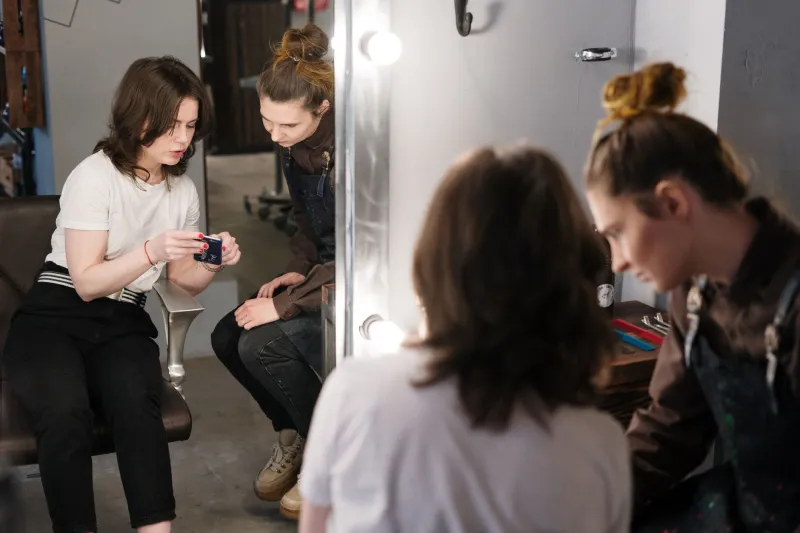
Not all diagnostic information is verbal. Pay close attention to the photographs clients bring to appointments. Notice whether the reference image reflects a realistic outcome given the client's current hair condition, natural texture, and maintenance capacity. When there is a significant gap between the reference and reality, addressing it directly—with professionalism and evidence—is far preferable to proceeding and falling short.
Also observe the client's demeanor during the consultation. Clients who are vague about their history, dismissive of your observations, or fixated on a single outcome without flexibility often require more careful expectation-setting before services begin. This is not a judgment; it is a clinical read that helps you serve them more effectively.
The Three Diagnostic Tests That Belong in Every Assessment
Beyond conversation and observation, three simple hands-on tests can dramatically sharpen your service plan.
The Porosity Test: Float a clean strand in a glass of room-temperature water for two to three minutes. Hair that sinks quickly is highly porous and will absorb product—and color—rapidly and unevenly. Hair that floats indicates low porosity, requiring additional preparation for chemical services to process effectively.
The Elasticity Check: Wet a single strand and gently stretch it. Healthy hair returns to its original length; over-processed or protein-depleted hair stretches and either stays elongated or breaks. This test determines whether a strengthening treatment should precede any chemical service.
The Scalp Assessment: Part the hair in several sections and examine the scalp directly. Look for signs of buildup, irritation, flaking, or thinning. A compromised scalp environment affects how services perform and may indicate a need for targeted treatment before proceeding.
Documenting What You Find
A consultation that is not documented is a consultation that cannot protect you or your client. Whether your salon uses digital client management software or paper intake cards, every assessment should be recorded. Note the physical findings, the client's stated history, the agreed-upon service plan, and any concerns that were discussed and acknowledged.
This documentation serves multiple purposes. It creates continuity across appointments—so that the next stylist who sees this client has a complete picture—and it establishes a clear record in the event of a post-service dispute. More importantly, it signals to your client that their hair is being treated as a case, not a transaction.
Setting the Service Plan Together
The final phase of the fifteen-minute assessment is collaborative. Present your findings to the client clearly and without condescension. Explain what you observed, what it means for today's service, and what you recommend—including any modifications to their original request.
Clients who feel informed rather than managed are far more likely to trust your professional judgment, accept necessary adjustments, and return for follow-up care. The consultation is not the place to tell a client what they want to hear; it is the place to establish the honest, expert relationship that makes exceptional outcomes possible.
When a stylist walks a client through a structured assessment—touching the hair, asking the right questions, running the appropriate tests, and documenting everything—that client leaves the chair with more than a great style. They leave with confidence in the professional who delivered it. And that confidence is what builds the kind of clientele that sustains a career.
Fifteen minutes invested before the service begins is the most efficient use of time in the salon. The stylists who treat it that way are the ones whose books stay full.