When the Mirror Tells a Different Story: Understanding Why Hair Texture Transforms—and How Professionals Can Help Clients Navigate the Shift
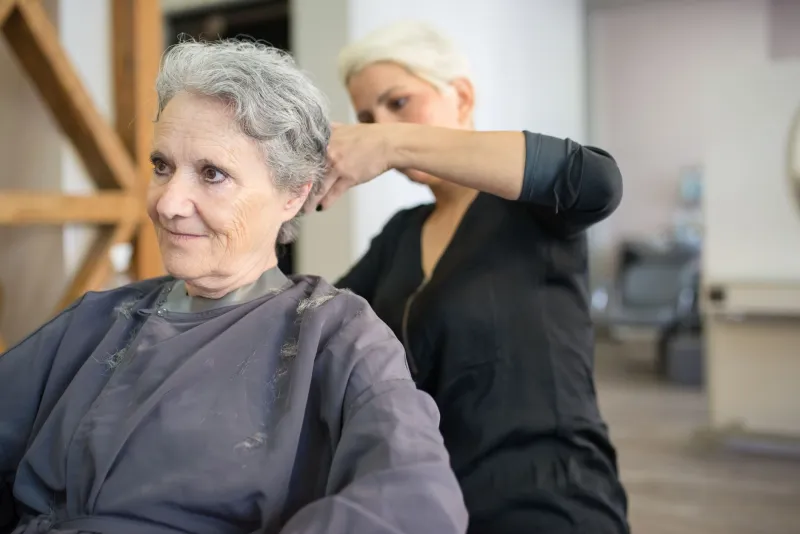
It begins with a quiet observation. A client settles into the chair and says, almost apologetically, that her hair "just isn't the same anymore." The straight strands she's managed for decades have developed an unexpected wave. Or the coils that once defined her identity have loosened considerably. Or her once-dense mane has thinned at the temples in a way no product seems to address.
These moments are not anomalies. They are among the most common—and least discussed—experiences in the salon chair. Hair texture is a dynamic characteristic, shaped by a complex interplay of biology, chemistry, and environment. For professionals who understand this reality, these conversations become opportunities to deepen client trust and demonstrate expertise that extends well beyond technique.
The Biology of Texture: What the Hair Follicle Is Actually Telling You
To understand why texture changes, it helps to revisit the source. Each hair strand originates from a follicle embedded in the scalp, and the shape of that follicle—round, oval, or asymmetrical—largely determines whether the resulting strand is straight, wavy, or curly. What many clients do not realize is that follicle morphology is not entirely static. It responds to hormonal signals, nutritional status, inflammation, and even chronic physical tension.
The cortex, the innermost structural layer of the hair shaft, is composed of keratin proteins arranged in a specific pattern. Disulfide bonds within this cortex determine elasticity and curl pattern. When the body's hormonal environment shifts, the rate and pattern of keratin production can change—subtly or dramatically—altering the strand's behavior at the root before the client ever notices a difference at the ends.
This is why texture changes rarely announce themselves all at once. They emerge gradually, strand by strand, often over months or even years.
Hormonal Milestones: The Most Common Catalysts for Change
Among the most significant drivers of texture transformation are the hormonal milestones that punctuate a woman's life—though men are not exempt from these influences either.
Postpartum shifts are perhaps the most widely recognized. During pregnancy, elevated estrogen levels prolong the growth phase of the hair cycle, resulting in the lush, full hair many expectant clients enjoy. After delivery, estrogen levels drop sharply, triggering a mass shedding phase known as telogen effluvium. What is less commonly discussed is that the hair that regrows following this shed may exhibit a noticeably different texture—sometimes wavier, sometimes finer, and occasionally more fragile than before.
Perimenopause and menopause introduce another profound hormonal recalibration. Declining estrogen and progesterone levels, combined with a relative increase in androgen activity, can cause strands to become coarser at the temples, finer at the crown, or more prone to frizz throughout. Clients in their forties and fifties frequently arrive at the salon frustrated that their longtime routines have stopped working—not because the products have failed, but because the hair itself has changed.
Thyroid dysfunction, both hypothyroidism and hyperthyroidism, is another hormonal factor that merits attention. Clients experiencing unexplained texture changes, particularly alongside fatigue, weight fluctuation, or skin changes, should be gently encouraged to consult a physician. Stylists are not diagnosticians, but they are often the first to notice patterns that warrant medical attention.
Environmental and Lifestyle Factors That Compound the Shift
Biology does not operate in isolation. The environment a client inhabits and the lifestyle choices she makes layer additional variables onto an already complex equation.
Chronically high stress levels elevate cortisol, which can disrupt the hair growth cycle and compromise scalp circulation. Clients navigating demanding careers, caregiving responsibilities, or significant life transitions may find that their hair reflects that internal pressure before they consciously register its toll.
Nutritional deficiencies—particularly in iron, zinc, biotin, and protein—can alter strand integrity and texture over time. The rise of restrictive dietary patterns in the United States has made this a more common conversation in salons than it was a generation ago. A client who adopted an elimination diet six months ago and is now concerned about her hair's behavior may be experiencing the downstream effects of nutritional gaps.
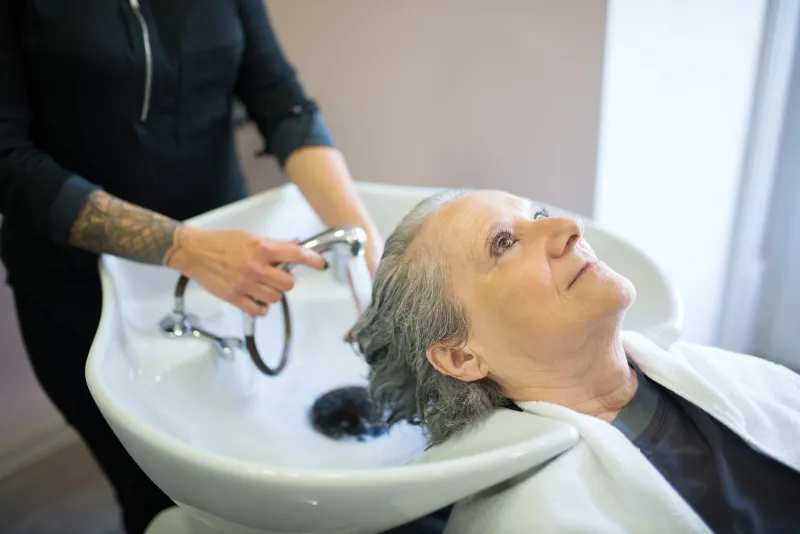
Water quality deserves mention as well. Hard water, prevalent across much of the American Midwest and Southwest, deposits mineral buildup on the hair shaft that can mimic texture change by creating roughness, dullness, and resistance to styling. Clarifying protocols can distinguish genuine texture shifts from surface-level accumulation.
Building the Diagnostic Framework: Questions That Reveal the Full Picture
When a client presents with an unexpected texture change, the instinct may be to immediately recommend a new product or adjust the cut. However, the more valuable response is to slow down and gather information.
A structured consultation approach might include the following lines of inquiry:
- Timeline: When did the change first become noticeable? Was the onset gradual or relatively sudden?
- Life events: Has the client experienced a pregnancy, a significant illness, a major dietary change, or a period of elevated stress within the past one to two years?
- Product history: Has anything changed in the client's home care routine, including water source if she has recently relocated?
- Scalp condition: Is there any accompanying sensitivity, flaking, or tightness that might indicate an underlying scalp concern?
- Medical history: Is the client currently managing any health conditions or taking medications that might influence hair behavior?
This line of questioning accomplishes two things simultaneously. It equips the stylist with the contextual information needed to make accurate recommendations, and it signals to the client that she is being seen as a whole person rather than a set of strands to be managed.
Adapting the Approach: Practical Adjustments for Shifting Texture
Once the contributing factors have been identified, the work of adaptation begins. There is no universal protocol—each client's situation calls for a tailored response—but several principles apply broadly.
For clients experiencing postpartum or hormonally driven changes, lightweight protein treatments can help stabilize strands during the regrowth phase without overwhelming fine new growth. Hydration-forward formulas become increasingly important as estrogen levels decline, since drier, more porous strands respond poorly to the heavier conditioning agents that may have served the client well in earlier years.
For clients whose texture has shifted toward increased wave or curl, the cut itself may need to be reconsidered. Layering strategies that once created movement may now amplify frizz. A shape that honors the emerging texture rather than fighting it will serve the client far better in the long term.
For those dealing with the mineral buildup associated with hard water, a consistent clarifying regimen followed by intensive conditioning can restore the strand's natural behavior—revealing whether the underlying texture has truly changed or was simply obscured.
Positioning the Stylist as a Trusted Advisor Through Transition
The most enduring professional relationships are built not during periods of stability, but during moments of uncertainty. When a client is confused and frustrated by changes she did not anticipate, the stylist who responds with knowledge, patience, and a clear plan becomes indispensable.
This is the professional opportunity embedded within every texture shift conversation. Rather than treating these changes as inconvenient complications, skilled stylists recognize them as invitations to deepen the relationship—to demonstrate that their expertise encompasses not just what the hair looks like today, but what it needs to thrive through every chapter of a client's life.
Hair is not static. Neither is the expertise required to care for it well.