Curl, Coil, and Compromise: How Stylists Can Honor Natural Texture Without Abandoning Their Craft
For decades, the American salon industry measured success in smoothness. Sleek blowouts, relaxed strands, and frizz-free finishes were the benchmarks of a job well done. But walk into a salon in any major U.S. city today and you will encounter a different kind of client—one who arrives not with a request for transformation, but with a desire for affirmation. She wants her curls celebrated, not corrected. He wants his coils defined, not dissolved.
This cultural shift has created an unexpected friction point inside the salon chair. Professionals trained in a tradition that equated polish with professionalism are now navigating a client base that increasingly views those same techniques as antithetical to their identity. The tension is real, and it is reshaping what it means to offer expert hair care in the modern era.
The Movement Behind the Moment
The natural hair movement in the United States did not emerge overnight. It has roots in decades of advocacy, cultural pride, and a growing body of research documenting the physical and psychological toll of chronic chemical straightening. The Clean Beauty movement accelerated awareness of ingredient safety, while social media gave curl-positive communities an unprecedented platform to share their journeys.
For Black women in particular, embracing natural texture has carried profound personal and political weight. But the conversation has broadened considerably. Clients with wavy, loosely curled, or chemically fatigued hair are also reconsidering their relationship with heat and chemical services. The common thread is a desire for authenticity—and an expectation that their salon professional will meet them there.
Yet many stylists find themselves in an uncomfortable position. Their training emphasized smoothing, their service menus are built around chemical offerings, and their revenue models depend on repeat treatments. Supporting a client's natural texture goals, in some cases, means actively recommending fewer services.
Where the Conflict Lives
The misalignment between client goals and salon offerings often surfaces in subtle ways. A client requests a trim and a curl refresh; the stylist defaults to recommending a keratin treatment because it is what she knows. A client expresses frustration with frizz; the professional interprets that as an opening for a smoothing service rather than a conversation about hydration and porosity.
These disconnects are not born of bad intention. They reflect a training gap that the industry is only beginning to close. Cosmetology programs in the United States have historically underrepresented textured hair education, leaving many licensed professionals underprepared to confidently serve clients whose hair does not conform to straight or slightly wavy norms.
Stylists who have invested in continuing education around textured hair describe a steep but rewarding learning curve. The technical vocabulary alone—porosity levels, shrinkage ratios, the difference between a 3C and 4A curl pattern—represents a knowledge base that many professionals acquired on their own time, outside of formal training.
Reframing the Consultation
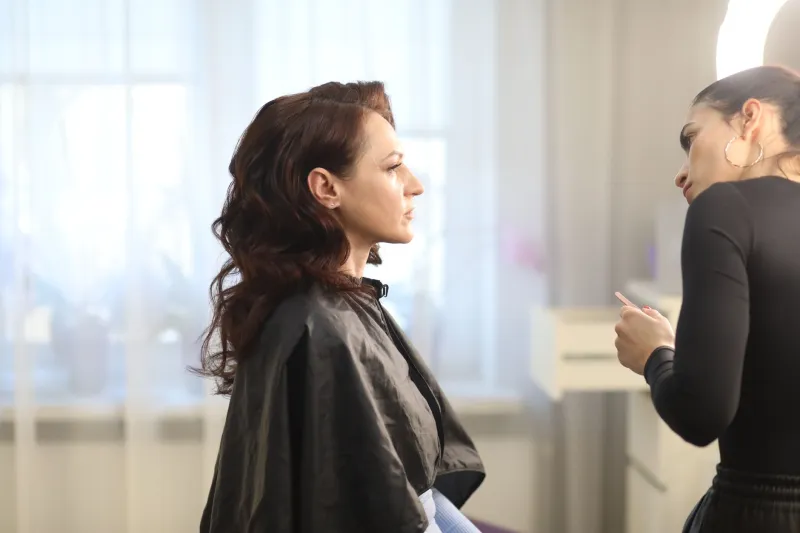
Experts working at the intersection of texture acceptance and professional technique point to the consultation as the most critical point of intervention. The goal is not to abandon the stylist's expertise but to redirect it.
Rather than opening with a service recommendation, professionals are encouraged to begin with a question: What does your hair feel like when it is at its best? This invites the client to articulate their ideal outcome in their own terms, rather than selecting from a predetermined menu. It also signals that the stylist is listening before prescribing.
From there, the conversation can explore what the client's current routine looks like, what challenges they are encountering, and what role—if any—they want professional treatments to play in their texture journey. Some clients are seeking to transition away from chemical services entirely. Others want to retain a degree of professional intervention while reducing damage. Many simply want a stylist who understands their hair without judgment.
This kind of intake process requires a different kind of confidence than technical skill alone. It asks professionals to hold space for client autonomy while still offering informed guidance. That balance is where the modern stylist's value truly lives.
Technical Support for Natural Goals
Supporting natural texture does not mean abandoning the treatment room. It means expanding the definition of what a professional service can accomplish.
Deep conditioning treatments formulated for high-porosity or chemically fatigued hair can be genuinely transformative for clients in the middle of a natural transition. Protein-moisture balance protocols, when applied correctly, help restore integrity to strands that have been weakened by years of heat or chemical exposure. Scalp treatments that promote a healthy follicular environment support the kind of growth clients are trying to nurture.
Styling education is another underutilized service offering. Teaching a client how to properly apply a leave-in conditioner, how to diffuse without disrupting curl formation, or how to protect their hair during sleep is a billable service that directly supports their natural goals—and builds the kind of trust that generates long-term loyalty.
Some salons have begun offering what they call "texture consultations" as a standalone appointment—a dedicated session focused entirely on understanding the client's hair and co-creating a care plan. This model positions the professional as a partner rather than a vendor, and it reflects a maturity in how the industry is beginning to understand its role.
The Business Case for Authenticity
For salon owners concerned about revenue implications, the data tells an encouraging story. Clients who feel genuinely understood and respected by their stylists are significantly more likely to return consistently, refer others, and invest in retail products recommended by their trusted professional.
The natural hair care segment is also one of the fastest-growing in the U.S. beauty market. Brands formulating specifically for textured hair have seen sustained growth, and salons that position themselves as knowledgeable partners in that space are capturing a loyal and underserved clientele.
More practically, stylists who expand their textured hair expertise are differentiating themselves in an increasingly competitive market. The ability to confidently serve a client with 4C coils, a client mid-keratin-transition, and a client managing color-treated waves in the same afternoon is a professional asset of considerable value.
Moving Forward Without Moving Backward
The shift toward texture acceptance is not a rejection of professional hair care—it is an invitation to evolve it. The most effective stylists working today are not those who have abandoned their technical foundations, but those who have learned to apply them in service of a wider range of client goals.
This requires humility, ongoing education, and a willingness to let the client's vision lead. It also requires the industry to take a hard look at where its training programs, service menus, and marketing language still implicitly privilege straightness as the default standard of beauty.
When a client sits down in the salon chair hoping to see her natural texture celebrated rather than corrected, she is offering her stylist an opportunity—to demonstrate that professional expertise and genuine affirmation are not in conflict. They never had to be.